Plot Summary
Chapter 1: Part 1: Human colonists treat Athshe as a resource frontier rather than a living world
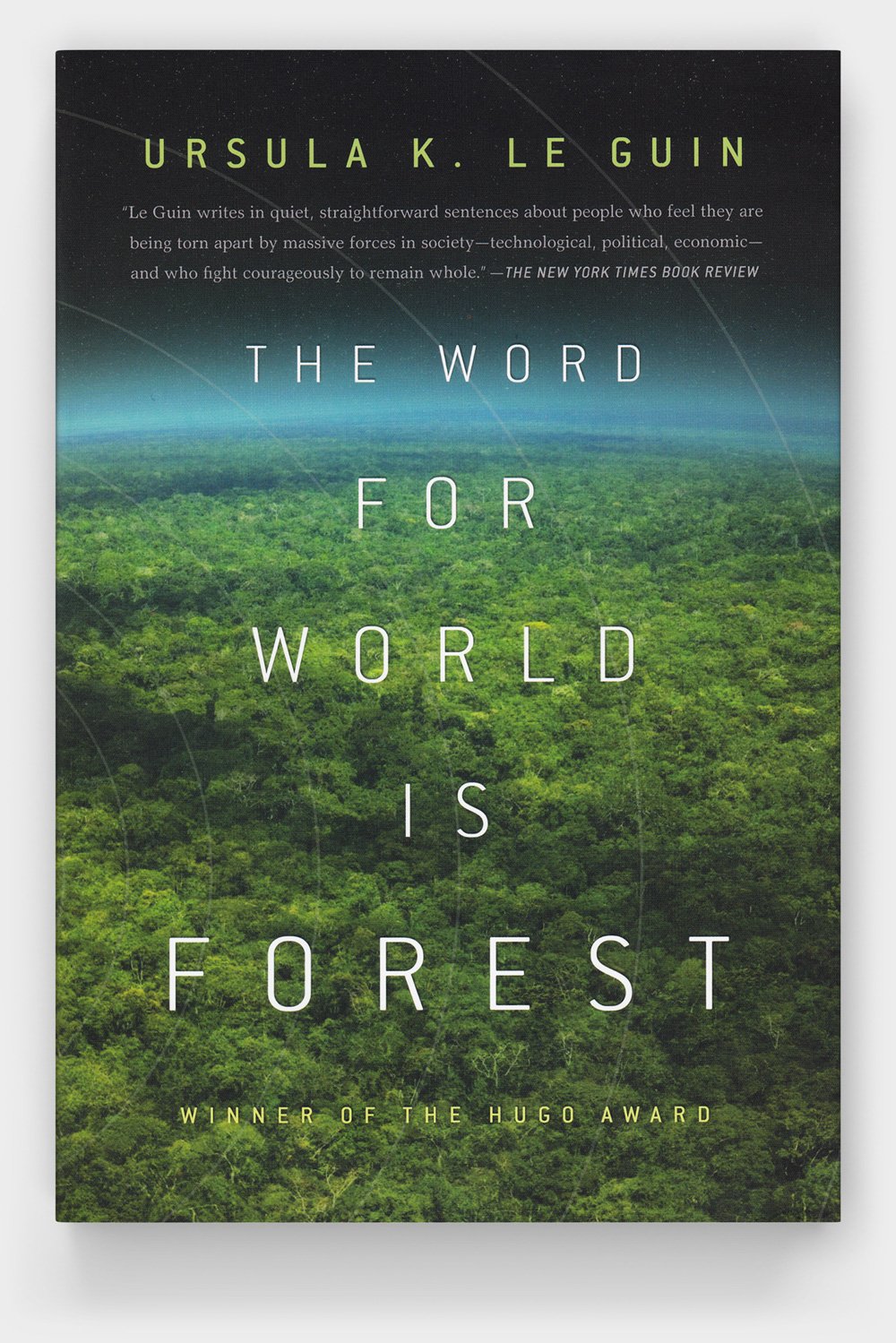
The Word for World Is Forest compresses an entire colonial tragedy into a short, severe science fiction form. On Athshe, humans arrive to extract timber and impose hierarchy on a world whose people live through a different relation to dream, language, and forest. Le Guin makes ecology inseparable from culture. In The Word for World Is Forest, this is more than a point on the plot line. It establishes the terms on which later choices have to be judged. The pressure in chapter 1: part 1: human colonists treat athshe as a resource frontier rather than a living world comes from the fact that a character cannot simply step outside the situation and start again. What has already been said, withheld, promised, or damaged remains present in every later exchange. That accumulated pressure is what gives the chapter its weight: the reader is asked to notice not only an action, but the history that makes the action costly.
The public premise of The Word for World Is Forest is ursula k. le guin's ecological science fiction novella follows colonial violence on a forest world whose people understand dream, language, and land differently. Chapter 1 develops that premise by moving from an abstract problem to a personal one. A large system, family history, profession, friendship, romance, or social expectation becomes legible through the smaller decisions people make when they are afraid of being seen clearly. The most useful reading question here is therefore not who is simply right. It is what each person believes they can protect, and what that protection asks them to sacrifice.
Chapter 1: Part 1: Human colonists treat Athshe as a resource frontier rather than a living world also changes the emotional vocabulary available to the characters. Before this point, they may be able to rely on a familiar story about themselves or about one another. Once the chapter's conflict becomes unavoidable, that story begins to fail. The tension does not have to depend on a hidden twist to feel real. It can come from the ordinary difficulty of admitting dependence, recognizing harm, revising a memory, or accepting that an old role no longer offers safety. That is the level on which this section is most rewarding to discuss.
A close reading should follow the gap between public behavior and private consequence. The Word for World Is Forest repeatedly makes social roles matter: people are shaped by what their environment rewards, by the version of events they can safely repeat, and by the relationships they cannot easily leave. In this chapter, those pressures narrow the field of choice. Even a decision that looks voluntary may carry the weight of earlier exclusions, loyalties, or expectations. The book's force lies in making that constraint visible without reducing its characters to a single explanation.
The chapter's structure invites attention to cause and effect. One moment of hesitation can alter how a relationship is read; one disclosure can make an earlier kindness look different; one act of loyalty can create a debt that later becomes difficult to repay. These are not interchangeable dramatic beats. They create the moral rhythm of The Word for World Is Forest. As you read, track which facts are confirmed, which assumptions are being challenged, and which questions remain deliberately open. That distinction helps preserve the novel's suspense while making its deeper concerns easier to name.
There is also an important difference between explanation and excuse. Chapter 1: Part 1: Human colonists treat Athshe as a resource frontier rather than a living world may help readers understand why a character behaves as they do, but understanding is not the same as absolution. The most compelling fiction lets motives remain layered: fear can coexist with care, ambition with generosity, desire with control, and loyalty with avoidance. This chapter gains depth when it resists a simple verdict. Instead, it asks what responsibility looks like once a character sees the consequences of their choices and can no longer claim not to know.
For book-club readers, this section offers a useful point of disagreement. Some readers will focus on the immediate event, while others will read it as the result of an earlier pattern. Both approaches can be supported if the discussion stays close to the pressure the novel has already established. Ask which relationship changes most in this chapter, what information each person is missing or refusing, and whether the new situation creates freedom, obligation, or both. Those questions lead beyond recap into interpretation.
By the end of this movement, The Word for World Is Forest has made its central problem harder rather than merely larger. The story does not need to reveal every answer at once for the chapter to feel complete. Its achievement is to reposition the reader: the original premise now carries a more complicated emotional meaning, and the next decision will be judged against that expanded understanding. That is why this chapter belongs in the larger arc. It transforms the question from what will happen into what kind of person, relationship, or community can survive what has happened.
Chapter 2: Part 2: The Athsheans' dream culture is misunderstood as passivity by the occupiers
This part of The Word for World Is Forest matters because it gives the central conflict an emotional shape rather than treating it as a sequence of plot points. The public premise frames the story around ursula k. le guin's ecological science fiction novella follows colonial violence on a forest world whose people understand dream, language, and land differently. Read the choices in this section as tests of loyalty, responsibility, and self-understanding: the important question is not only what a character does, but what that action makes possible or impossible afterward. In The Word for World Is Forest, this is more than a point on the plot line. It establishes the terms on which later choices have to be judged. The pressure in chapter 2: part 2: the athsheans' dream culture is misunderstood as passivity by the occupiers comes from the fact that a character cannot simply step outside the situation and start again. What has already been said, withheld, promised, or damaged remains present in every later exchange. That accumulated pressure is what gives the chapter its weight: the reader is asked to notice not only an action, but the history that makes the action costly.
The public premise of The Word for World Is Forest is ursula k. le guin's ecological science fiction novella follows colonial violence on a forest world whose people understand dream, language, and land differently. Chapter 2 develops that premise by moving from an abstract problem to a personal one. A large system, family history, profession, friendship, romance, or social expectation becomes legible through the smaller decisions people make when they are afraid of being seen clearly. The most useful reading question here is therefore not who is simply right. It is what each person believes they can protect, and what that protection asks them to sacrifice.
Chapter 2: Part 2: The Athsheans' dream culture is misunderstood as passivity by the occupiers also changes the emotional vocabulary available to the characters. Before this point, they may be able to rely on a familiar story about themselves or about one another. Once the chapter's conflict becomes unavoidable, that story begins to fail. The tension does not have to depend on a hidden twist to feel real. It can come from the ordinary difficulty of admitting dependence, recognizing harm, revising a memory, or accepting that an old role no longer offers safety. That is the level on which this section is most rewarding to discuss.
A close reading should follow the gap between public behavior and private consequence. The Word for World Is Forest repeatedly makes social roles matter: people are shaped by what their environment rewards, by the version of events they can safely repeat, and by the relationships they cannot easily leave. In this chapter, those pressures narrow the field of choice. Even a decision that looks voluntary may carry the weight of earlier exclusions, loyalties, or expectations. The book's force lies in making that constraint visible without reducing its characters to a single explanation.
The chapter's structure invites attention to cause and effect. One moment of hesitation can alter how a relationship is read; one disclosure can make an earlier kindness look different; one act of loyalty can create a debt that later becomes difficult to repay. These are not interchangeable dramatic beats. They create the moral rhythm of The Word for World Is Forest. As you read, track which facts are confirmed, which assumptions are being challenged, and which questions remain deliberately open. That distinction helps preserve the novel's suspense while making its deeper concerns easier to name.
There is also an important difference between explanation and excuse. Chapter 2: Part 2: The Athsheans' dream culture is misunderstood as passivity by the occupiers may help readers understand why a character behaves as they do, but understanding is not the same as absolution. The most compelling fiction lets motives remain layered: fear can coexist with care, ambition with generosity, desire with control, and loyalty with avoidance. This chapter gains depth when it resists a simple verdict. Instead, it asks what responsibility looks like once a character sees the consequences of their choices and can no longer claim not to know.
For book-club readers, this section offers a useful point of disagreement. Some readers will focus on the immediate event, while others will read it as the result of an earlier pattern. Both approaches can be supported if the discussion stays close to the pressure the novel has already established. Ask which relationship changes most in this chapter, what information each person is missing or refusing, and whether the new situation creates freedom, obligation, or both. Those questions lead beyond recap into interpretation.
By the end of this movement, The Word for World Is Forest has made its central problem harder rather than merely larger. The story does not need to reveal every answer at once for the chapter to feel complete. Its achievement is to reposition the reader: the original premise now carries a more complicated emotional meaning, and the next decision will be judged against that expanded understanding. That is why this chapter belongs in the larger arc. It transforms the question from what will happen into what kind of person, relationship, or community can survive what has happened.
Chapter 3: Part 3: Violence by the colonizers transforms the terms of resistance
Human colonists treat Athshe as a resource frontier rather than a living world. This stage matters because it changes what the reader thinks the book is doing. Instead of only moving the plot forward, it redefines the emotional stakes and adds a new layer to the protagonist's conflict. In The Word for World Is Forest, this is more than a point on the plot line. It establishes the terms on which later choices have to be judged. The pressure in chapter 3: part 3: violence by the colonizers transforms the terms of resistance comes from the fact that a character cannot simply step outside the situation and start again. What has already been said, withheld, promised, or damaged remains present in every later exchange. That accumulated pressure is what gives the chapter its weight: the reader is asked to notice not only an action, but the history that makes the action costly.
The public premise of The Word for World Is Forest is ursula k. le guin's ecological science fiction novella follows colonial violence on a forest world whose people understand dream, language, and land differently. Chapter 3 develops that premise by moving from an abstract problem to a personal one. A large system, family history, profession, friendship, romance, or social expectation becomes legible through the smaller decisions people make when they are afraid of being seen clearly. The most useful reading question here is therefore not who is simply right. It is what each person believes they can protect, and what that protection asks them to sacrifice.
Chapter 3: Part 3: Violence by the colonizers transforms the terms of resistance also changes the emotional vocabulary available to the characters. Before this point, they may be able to rely on a familiar story about themselves or about one another. Once the chapter's conflict becomes unavoidable, that story begins to fail. The tension does not have to depend on a hidden twist to feel real. It can come from the ordinary difficulty of admitting dependence, recognizing harm, revising a memory, or accepting that an old role no longer offers safety. That is the level on which this section is most rewarding to discuss.
A close reading should follow the gap between public behavior and private consequence. The Word for World Is Forest repeatedly makes social roles matter: people are shaped by what their environment rewards, by the version of events they can safely repeat, and by the relationships they cannot easily leave. In this chapter, those pressures narrow the field of choice. Even a decision that looks voluntary may carry the weight of earlier exclusions, loyalties, or expectations. The book's force lies in making that constraint visible without reducing its characters to a single explanation.
The chapter's structure invites attention to cause and effect. One moment of hesitation can alter how a relationship is read; one disclosure can make an earlier kindness look different; one act of loyalty can create a debt that later becomes difficult to repay. These are not interchangeable dramatic beats. They create the moral rhythm of The Word for World Is Forest. As you read, track which facts are confirmed, which assumptions are being challenged, and which questions remain deliberately open. That distinction helps preserve the novel's suspense while making its deeper concerns easier to name.
There is also an important difference between explanation and excuse. Chapter 3: Part 3: Violence by the colonizers transforms the terms of resistance may help readers understand why a character behaves as they do, but understanding is not the same as absolution. The most compelling fiction lets motives remain layered: fear can coexist with care, ambition with generosity, desire with control, and loyalty with avoidance. This chapter gains depth when it resists a simple verdict. Instead, it asks what responsibility looks like once a character sees the consequences of their choices and can no longer claim not to know.
For book-club readers, this section offers a useful point of disagreement. Some readers will focus on the immediate event, while others will read it as the result of an earlier pattern. Both approaches can be supported if the discussion stays close to the pressure the novel has already established. Ask which relationship changes most in this chapter, what information each person is missing or refusing, and whether the new situation creates freedom, obligation, or both. Those questions lead beyond recap into interpretation.
By the end of this movement, The Word for World Is Forest has made its central problem harder rather than merely larger. The story does not need to reveal every answer at once for the chapter to feel complete. Its achievement is to reposition the reader: the original premise now carries a more complicated emotional meaning, and the next decision will be judged against that expanded understanding. That is why this chapter belongs in the larger arc. It transforms the question from what will happen into what kind of person, relationship, or community can survive what has happened.
Chapter 4: Part 4: Selver becomes a figure through whom grief, rage, and cultural change converge
This part of The Word for World Is Forest matters because it gives the central conflict an emotional shape rather than treating it as a sequence of plot points. The public premise frames the story around ursula k. le guin's ecological science fiction novella follows colonial violence on a forest world whose people understand dream, language, and land differently. Read the choices in this section as tests of loyalty, responsibility, and self-understanding: the important question is not only what a character does, but what that action makes possible or impossible afterward. In The Word for World Is Forest, this is more than a point on the plot line. It establishes the terms on which later choices have to be judged. The pressure in chapter 4: part 4: selver becomes a figure through whom grief, rage, and cultural change converge comes from the fact that a character cannot simply step outside the situation and start again. What has already been said, withheld, promised, or damaged remains present in every later exchange. That accumulated pressure is what gives the chapter its weight: the reader is asked to notice not only an action, but the history that makes the action costly.
The public premise of The Word for World Is Forest is ursula k. le guin's ecological science fiction novella follows colonial violence on a forest world whose people understand dream, language, and land differently. Chapter 4 develops that premise by moving from an abstract problem to a personal one. A large system, family history, profession, friendship, romance, or social expectation becomes legible through the smaller decisions people make when they are afraid of being seen clearly. The most useful reading question here is therefore not who is simply right. It is what each person believes they can protect, and what that protection asks them to sacrifice.
Chapter 4: Part 4: Selver becomes a figure through whom grief, rage, and cultural change converge also changes the emotional vocabulary available to the characters. Before this point, they may be able to rely on a familiar story about themselves or about one another. Once the chapter's conflict becomes unavoidable, that story begins to fail. The tension does not have to depend on a hidden twist to feel real. It can come from the ordinary difficulty of admitting dependence, recognizing harm, revising a memory, or accepting that an old role no longer offers safety. That is the level on which this section is most rewarding to discuss.
A close reading should follow the gap between public behavior and private consequence. The Word for World Is Forest repeatedly makes social roles matter: people are shaped by what their environment rewards, by the version of events they can safely repeat, and by the relationships they cannot easily leave. In this chapter, those pressures narrow the field of choice. Even a decision that looks voluntary may carry the weight of earlier exclusions, loyalties, or expectations. The book's force lies in making that constraint visible without reducing its characters to a single explanation.
The chapter's structure invites attention to cause and effect. One moment of hesitation can alter how a relationship is read; one disclosure can make an earlier kindness look different; one act of loyalty can create a debt that later becomes difficult to repay. These are not interchangeable dramatic beats. They create the moral rhythm of The Word for World Is Forest. As you read, track which facts are confirmed, which assumptions are being challenged, and which questions remain deliberately open. That distinction helps preserve the novel's suspense while making its deeper concerns easier to name.
There is also an important difference between explanation and excuse. Chapter 4: Part 4: Selver becomes a figure through whom grief, rage, and cultural change converge may help readers understand why a character behaves as they do, but understanding is not the same as absolution. The most compelling fiction lets motives remain layered: fear can coexist with care, ambition with generosity, desire with control, and loyalty with avoidance. This chapter gains depth when it resists a simple verdict. Instead, it asks what responsibility looks like once a character sees the consequences of their choices and can no longer claim not to know.
For book-club readers, this section offers a useful point of disagreement. Some readers will focus on the immediate event, while others will read it as the result of an earlier pattern. Both approaches can be supported if the discussion stays close to the pressure the novel has already established. Ask which relationship changes most in this chapter, what information each person is missing or refusing, and whether the new situation creates freedom, obligation, or both. Those questions lead beyond recap into interpretation.
By the end of this movement, The Word for World Is Forest has made its central problem harder rather than merely larger. The story does not need to reveal every answer at once for the chapter to feel complete. Its achievement is to reposition the reader: the original premise now carries a more complicated emotional meaning, and the next decision will be judged against that expanded understanding. That is why this chapter belongs in the larger arc. It transforms the question from what will happen into what kind of person, relationship, or community can survive what has happened.
Chapter 5: Part 5: The novella ends with victory shadowed by irreversible contamination: violence has taught what cannot be unlearned
The Athsheans' dream culture is misunderstood as passivity by the occupiers. This stage matters because it changes what the reader thinks the book is doing. Instead of only moving the plot forward, it redefines the emotional stakes and adds a new layer to the protagonist's conflict. In The Word for World Is Forest, this is more than a point on the plot line. It establishes the terms on which later choices have to be judged. The pressure in chapter 5: part 5: the novella ends with victory shadowed by irreversible contamination: violence has taught what cannot be unlearned comes from the fact that a character cannot simply step outside the situation and start again. What has already been said, withheld, promised, or damaged remains present in every later exchange. That accumulated pressure is what gives the chapter its weight: the reader is asked to notice not only an action, but the history that makes the action costly.
The public premise of The Word for World Is Forest is ursula k. le guin's ecological science fiction novella follows colonial violence on a forest world whose people understand dream, language, and land differently. Chapter 5 develops that premise by moving from an abstract problem to a personal one. A large system, family history, profession, friendship, romance, or social expectation becomes legible through the smaller decisions people make when they are afraid of being seen clearly. The most useful reading question here is therefore not who is simply right. It is what each person believes they can protect, and what that protection asks them to sacrifice.
Chapter 5: Part 5: The novella ends with victory shadowed by irreversible contamination: violence has taught what cannot be unlearned also changes the emotional vocabulary available to the characters. Before this point, they may be able to rely on a familiar story about themselves or about one another. Once the chapter's conflict becomes unavoidable, that story begins to fail. The tension does not have to depend on a hidden twist to feel real. It can come from the ordinary difficulty of admitting dependence, recognizing harm, revising a memory, or accepting that an old role no longer offers safety. That is the level on which this section is most rewarding to discuss.
A close reading should follow the gap between public behavior and private consequence. The Word for World Is Forest repeatedly makes social roles matter: people are shaped by what their environment rewards, by the version of events they can safely repeat, and by the relationships they cannot easily leave. In this chapter, those pressures narrow the field of choice. Even a decision that looks voluntary may carry the weight of earlier exclusions, loyalties, or expectations. The book's force lies in making that constraint visible without reducing its characters to a single explanation.
The chapter's structure invites attention to cause and effect. One moment of hesitation can alter how a relationship is read; one disclosure can make an earlier kindness look different; one act of loyalty can create a debt that later becomes difficult to repay. These are not interchangeable dramatic beats. They create the moral rhythm of The Word for World Is Forest. As you read, track which facts are confirmed, which assumptions are being challenged, and which questions remain deliberately open. That distinction helps preserve the novel's suspense while making its deeper concerns easier to name.
There is also an important difference between explanation and excuse. Chapter 5: Part 5: The novella ends with victory shadowed by irreversible contamination: violence has taught what cannot be unlearned may help readers understand why a character behaves as they do, but understanding is not the same as absolution. The most compelling fiction lets motives remain layered: fear can coexist with care, ambition with generosity, desire with control, and loyalty with avoidance. This chapter gains depth when it resists a simple verdict. Instead, it asks what responsibility looks like once a character sees the consequences of their choices and can no longer claim not to know.
For book-club readers, this section offers a useful point of disagreement. Some readers will focus on the immediate event, while others will read it as the result of an earlier pattern. Both approaches can be supported if the discussion stays close to the pressure the novel has already established. Ask which relationship changes most in this chapter, what information each person is missing or refusing, and whether the new situation creates freedom, obligation, or both. Those questions lead beyond recap into interpretation.
By the end of this movement, The Word for World Is Forest has made its central problem harder rather than merely larger. The story does not need to reveal every answer at once for the chapter to feel complete. Its achievement is to reposition the reader: the original premise now carries a more complicated emotional meaning, and the next decision will be judged against that expanded understanding. That is why this chapter belongs in the larger arc. It transforms the question from what will happen into what kind of person, relationship, or community can survive what has happened.